Composting
At MVCG, we believe healthy soil grows healthy communities. Our on-site composting systems and worm farms turn food scraps and garden waste into rich, living soil that feeds our fruit and vegetables.
Whether you're new to composting or a seasoned soil lover, there’s always something to learn and share.
Join us in closing the loop—one compost bin at a time!
How we compost at MVCG
Hot Composting
A single build using layered carbon and nitrogen-rich materials. Heats up fast and produces finished compost in weeks.
Worm farming
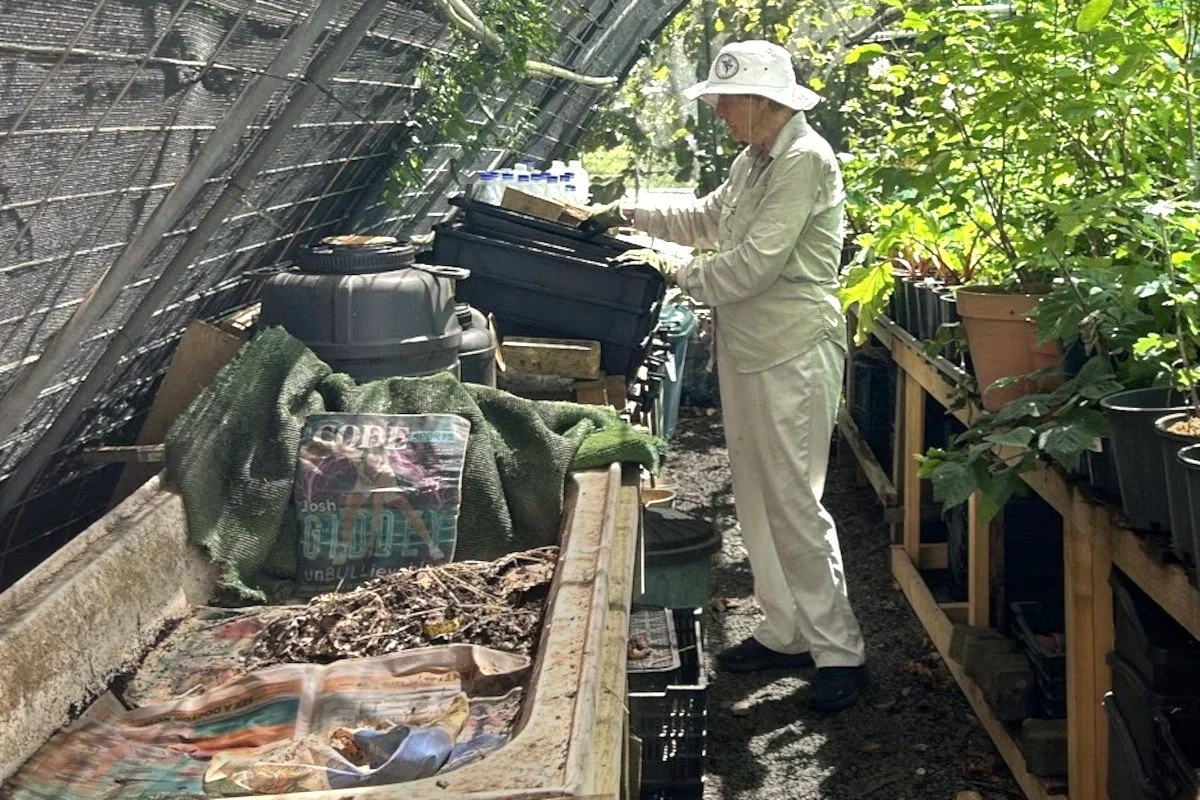
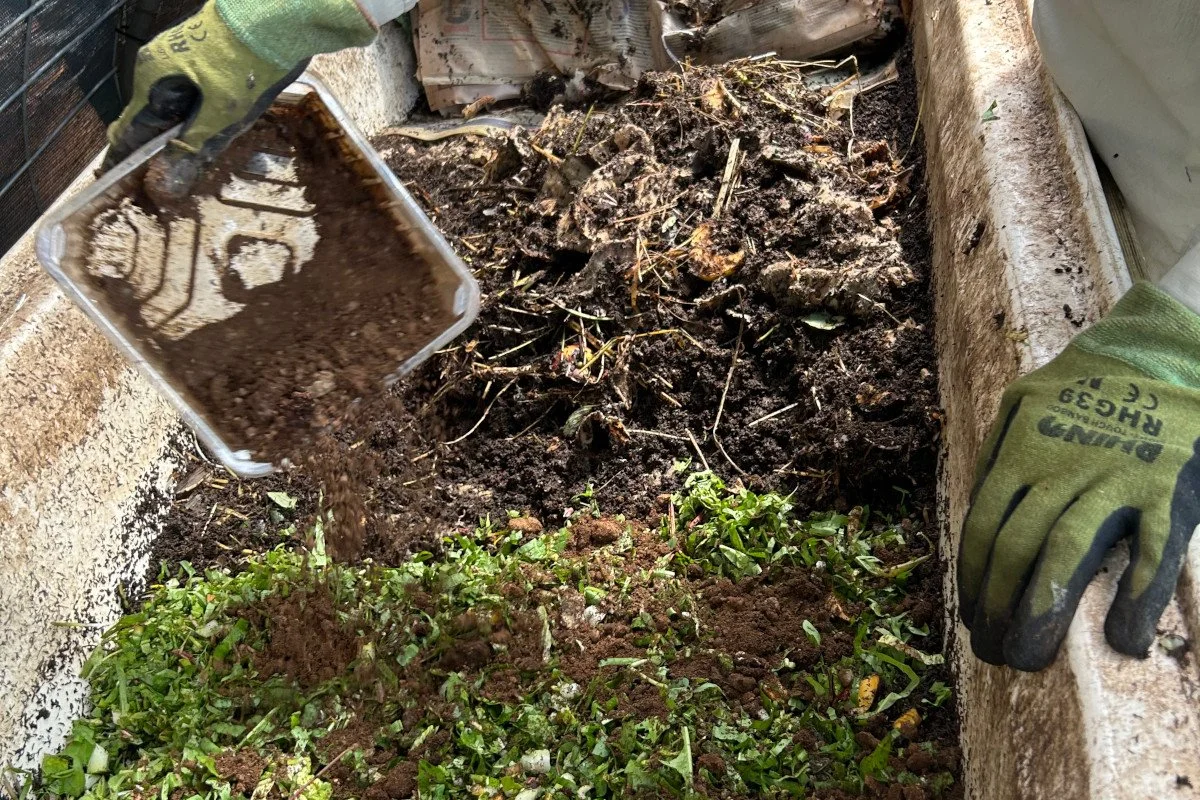
Our worm farms convert kitchen scraps into rich castings and liquid fertiliser — the best stuff in the garden.
Cold composting
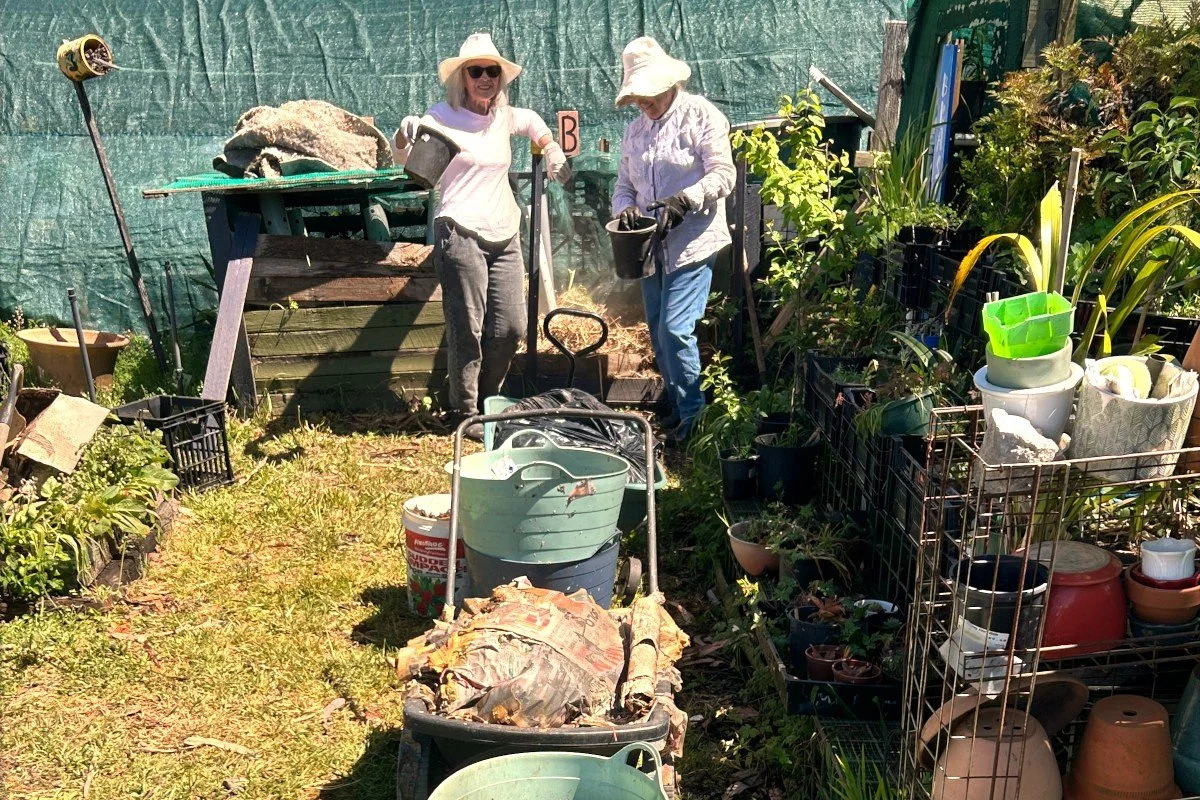
Our dalek bins collect garden green waste year-round. Slower, but simple — perfect for ongoing household scraps.
Hot composting — MVCG style
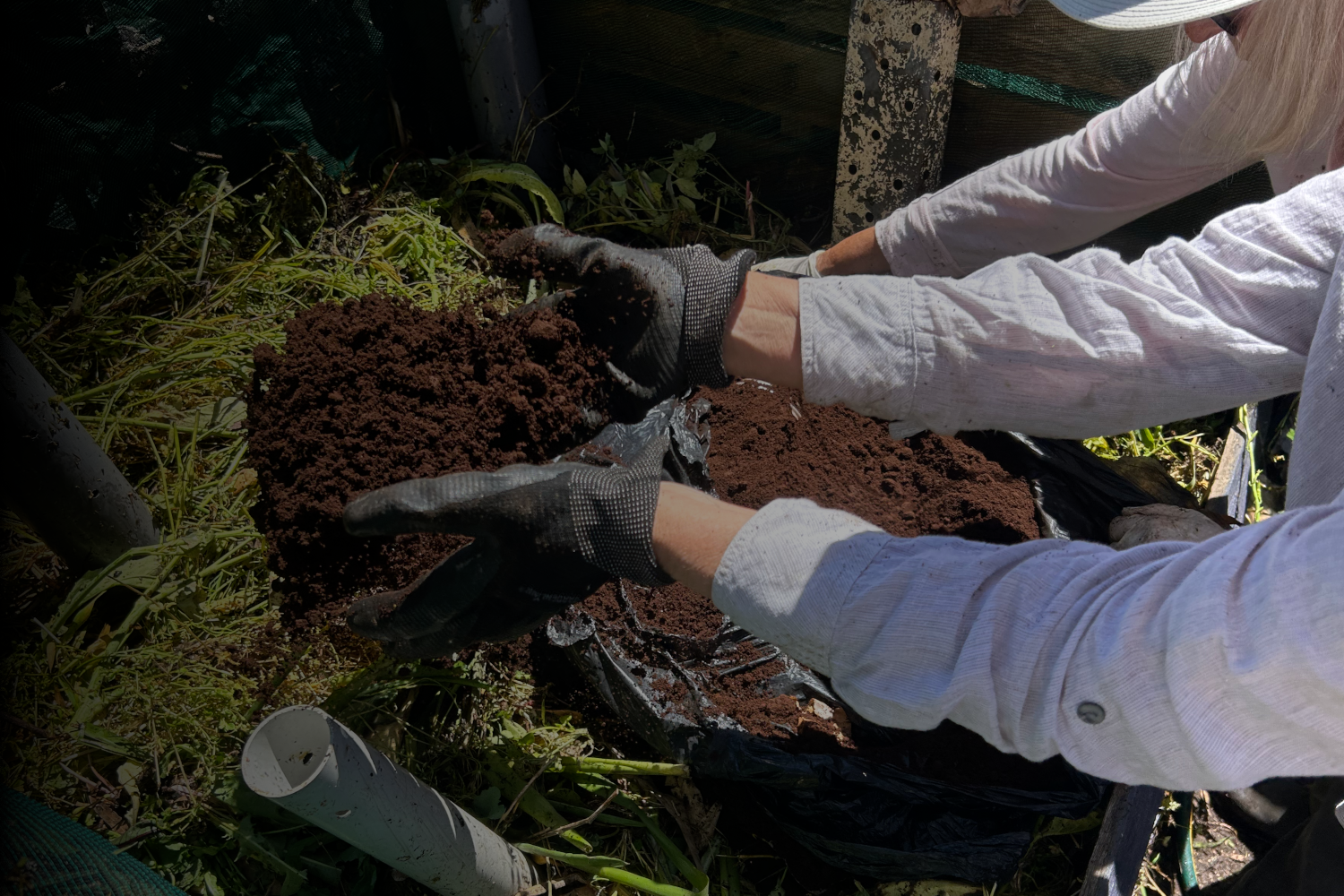
Unlike a typical backyard compost bin that you add to over months, a hot compost pile is built all at once using stockpiled materials. The key is alternating layers of high-carbon "browns" with nitrogen-rich "greens". Download the MVCG Hot Composting Process for details on our method.
Thanks to our wonderful community partners, we source coffee grounds from a local café, sheep shed litter from a generous donor, and sawdust from the Moss Vale Men's Shed.
We recommend The Compost Coach by Kate Flood (Compostable Kate) for anyone wanting to go deeper on all things composting.
Meet our worm whisperer
Worm composting is also called vermicomposting. Committee member Penny shares her vermicomposting wisdom. It is a terrific system for small spaces and can be used for most kitchen scraps. Worms convert organic waste into nutrient-dense castings and worm tea. Download the MVCG Vermicomposting method for details on our system.
Vermicompost contains plant-ready nitrogen, phosphate and potassium, plus trace elements and beneficial microorganisms that boost growth and suppress pests. Here are Penny’s tips for successful vermicomposting:
✂️Chop food scraps into small pieces — worms struggle with whole apples or large roots
🍋Avoid citrus, onions, garlic, meat, dairy, salty or highly processed foods
🍽️Feed slowly and in different spots each time — too much at once can overheat the farm
🥚Add crushed eggshells or a sprinkle of dolomite limestone to balance pH and add grit
☕Coffee grounds and plastic-free tea bags are a great addition
📰Add shredded paper or brown leaves to keep the carbon-to-nitrogen ratio in check
🌡️Cover with newspaper or hessian to keep temperature steady